
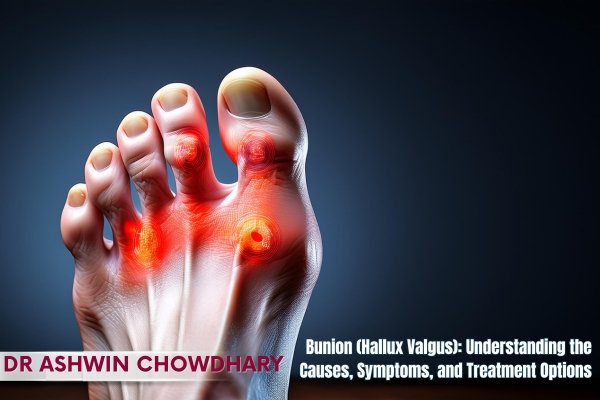
A bunion, medically known as Hallux Valgus, is one of the most common foot deformities affecting both adults and adolescents. It appears as a bony bump at the base of the big toe, causing the toe to gradually lean toward the second toe.
While many people initially consider bunions a cosmetic concern, they can progressively lead to pain, difficulty walking, footwear problems, and reduced quality of life if left untreated. Fortunately, early diagnosis and appropriate treatment can help relieve symptoms and prevent further deformity.
Under the expert care of Dr. Ashwin Chowdhary, patients receive specialized evaluation and advanced treatment options for bunions and other foot and ankle conditions in both adults and children.
What is the Condition?
A bunion (Hallux Valgus) is a deformity of the joint at the base of the big toe (first metatarsophalangeal joint). Over time, the big toe gradually shifts inward toward the smaller toes, while the joint at its base protrudes outward, forming a noticeable bump.
As the deformity progresses, it can affect foot alignment, balance, and walking mechanics.
Common Causes of Bunions
- Genetic predisposition and family history
- Abnormal foot structure
- Flat feet
- Ligament laxity
- Arthritis affecting the foot joints
- Neuromuscular conditions
- Improper footwear that places excessive pressure on the toes
While tight shoes do not directly cause bunions, they can worsen existing deformities and symptoms.
When Should You Seek Treatment?
You should consult a foot and ankle specialist if you experience:
- A visible bump at the base of the big toe
- Pain around the big toe joint
- Redness, swelling, or tenderness
- Difficulty wearing shoes comfortably
- Corns or calluses between the toes
- Limited movement of the big toe
- Progressive toe deformity
- Difficulty walking or participating in daily activities
- Foot fatigue or altered gait
Early evaluation can help prevent worsening deformity and reduce the likelihood of requiring more complex treatment later.
Why is Treatment Recommended?
Treatment is recommended to relieve pain, improve foot function, and prevent progression of the deformity.
Benefits of Early Treatment
Pain Relief
Reducing pressure and correcting alignment can significantly improve comfort.
Improved Walking Ability
Proper treatment helps restore more natural foot mechanics and gait.
Better Footwear Comfort
Patients often experience improved shoe fit and reduced irritation.
Prevention of Progression
Early intervention may slow or stop worsening of the deformity.
Improved Cosmetic Appearance
Correction of the bunion can improve the appearance of the foot.
Enhanced Quality of Life
Reduced pain and improved mobility help patients return to normal daily activities.
Treatment Options
Depending on the severity of the condition, treatment may include:
- Footwear modification
- Orthotic devices
- Activity modification
- Anti-inflammatory medications
- Physiotherapy
- Padding and splinting
- Corrective bunion surgery for advanced cases
Risks and Complications
If bunions are left untreated, complications may develop over time.
Potential complications include:
- Chronic foot pain
- Progressive toe deformity
- Difficulty walking
- Joint stiffness
- Development of hammertoes
- Arthritis of the big toe joint
- Calluses and skin irritation
- Difficulty finding comfortable footwear
- Reduced participation in physical activities
Risks of Bunion Surgery
Although bunion surgery is generally safe and effective, potential surgical risks include:
- Infection
- Delayed bone healing
- Recurrence of the bunion
- Stiffness of the toe joint
- Nerve irritation
- Persistent swelling
- Overcorrection or undercorrection
Careful surgical planning and postoperative rehabilitation help minimize these risks.
Frequently Asked Questions (FAQ)
What is the main cause of a bunion?
Bunions are most commonly caused by inherited foot structure and biomechanical abnormalities. Certain footwear can aggravate symptoms but is rarely the sole cause.
Can a bunion go away without treatment?
No. Bunions do not disappear on their own. However, early treatment can help manage symptoms and slow progression.
Is bunion surgery always necessary?
No. Many patients achieve symptom relief with conservative treatments. Surgery is usually recommended when pain and deformity significantly affect daily life.
How long does recovery take after bunion surgery?
Recovery varies depending on the procedure performed. Most patients return to normal activities within several weeks to a few months.
Can children develop bunions?
Yes. Adolescent Hallux Valgus can occur in children and teenagers, particularly when there is a family history of the condition.
Are bunions painful?
Not all bunions cause pain initially. However, many patients develop discomfort, swelling, and difficulty wearing shoes as the deformity progresses.
Can bunions return after surgery?
Recurrence is uncommon when surgery is appropriately planned and postoperative instructions are followed, but it remains a possibility.
About Dr. Ashwin Chowdhary
Dr. Ashwin Chowdhary
MBBS, Diploma in Orthopaedics, MRCS (UK)
Fellowship in Foot & Ankle Surgery
(Switzerland, France, Belgium)
Fellowship in Paediatric Orthopaedics
(Singapore)
Consultant Foot & Ankle Surgeon (Adult & Paediatrics)
Dr. Ashwin Chowdhary specializes in the treatment of foot and ankle disorders in both adults and children. With advanced international fellowship training in foot and ankle surgery and pediatric orthopaedics, he provides comprehensive care for bunions, deformities, sports injuries, arthritis, and complex foot conditions using evidence-based and patient-centered treatment approaches.
Call to Action (CTA)
Don’t ignore persistent foot pain or a growing bunion deformity. Early diagnosis and expert treatment can help relieve discomfort, improve mobility, and prevent long-term complications.
Book a consultation with Dr. Ashwin Chowdhary today to receive a comprehensive assessment and personalized treatment plan for Bunion (Hallux Valgus) and other foot and ankle conditions. Take the first step toward healthier, pain-free movement.